


New Year Party in Goa 2027: 10 Best Private Pool Villas
 | Oct 28, 2026

You’ve seen the Taj Mahal a thousand times before you ever set foot near it, on postcards, in movies, on someone’s Instagram feed. And yet none of that quite prepares you for the real thing. There’s something about standing in front of that glowing white marble, with the gardens stretching out and the reflecting pools doubling the view, that photos just can’t fake. Located in Agra, Uttar Pradesh, the Taj Mahal earns its spot on every traveller’s bucket list, whether you’re chasing history, architecture, culture, or simply that one perfect photograph.
The good news? A Taj Mahal trip doesn’t have to be a solo mission. Pair it with Agra’s other heritage sites, its buzzing local markets, and its seriously underrated food scene, and you’ve got yourself a proper getaway. Whether you’re squeezing in a whirlwind day trip or settling in for a relaxed weekend, sorting the timings, tickets, and best time to visit in advance will save you unnecessary hassle.
The Taj Mahal isn’t just a famous monument you tick off a list; it’s an experience that sticks with you. Here’s what makes it worth the trip.
Every great monument has a great story, and the Taj Mahal’s is a love story turned architectural marvel. It was commissioned by Mughal emperor Shah Jahan as a tribute to his wife, Mumtaz Mahal. Construction kicked off in the 17th century and grew into something far bigger than a single building; it became an entire complex, meticulously planned down to the last detail.
The main mausoleum, carved from white marble, is famous for its near-perfect symmetry, intricate decorative work, and that unmistakable dome. Around it sits a wider complex of gardens, gateways, a mosque, and other structures, every piece placed with intention. Centuries later, the Taj Mahal is still Agra’s crown jewel, and arguably one of the most important cultural landmarks in the country.
A little planning around the Taj Mahal’s timings goes a long way; nobody wants to waste their trip standing in a queue.
Timings can shift around special occasions or for administrative reasons, so it’s always worth double-checking before you head out.
Ticket prices aren’t one-size-fits-all; they change depending on your visitor category and which areas of the complex you want access to.
Before you set off, look up the latest ticket details and entry rules so there are no surprises at the gate. And a small tip: keep your ticket within easy reach the whole time, and factor in extra minutes for security checks.
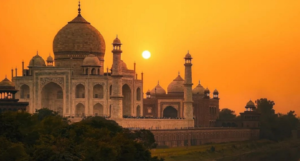
Timing your trip right comes down to two things: the weather, and the kind of experience you’re after.
This stretch is generally the sweet spot for sightseeing, especially if you want to spend hours wandering Agra without wilting in the heat. Winter mornings do get chilly though, so pack a light layer.
Things heat up fast, especially by afternoon. If summer is your only window, an early morning visit is the way to go.
Monsoon season brings humidity and the occasional downpour. The weather can be a bit unpredictable, but there’s a silver lining: everything looks refreshingly green after the rain.
For the most comfortable sightseeing overall, October to February is your best bet, while early mornings work well year-round whenever the heat is a concern.
Early morning is the crowd favourite; the air is cooler, and the soft morning light does something magical to the white marble.
Late afternoon is a close second, especially if you want to watch the monument shift colours as the light changes. If you’re travelling during the hotter months, just steer clear of planning your main sightseeing around peak afternoon heat.
The Taj doesn’t have to be a one-angle experience. A little exploring around Agra opens up some genuinely different perspectives.
This is the postcard view, the one everyone pictures. The long pathways and reflecting pools create that iconic, perfectly balanced frame.
Cross the Yamuna River, and you’ll find Mehtab Bagh, which offers a totally different vantage point. It’s especially worth it around sunset, when the light starts to shift.
For a quieter, more distant view, the riverfront area delivers a nice change of pace if you want the Taj from another angle entirely.
Agra has a lot more up its sleeve than just the Taj. If your itinerary has room to spare, these are worth squeezing in.
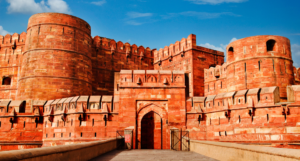
Location: On the banks of the Yamuna River, around 2.5 km from the Taj Mahal
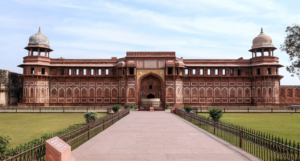
A massive slice of Mughal history, complete with towering red sandstone walls, sprawling courtyards, and palaces that give you a real feel for royal life back in the day. This UNESCO World Heritage Site once served as the main residence of Mughal emperors before Shah Jahan shifted the capital, and it’s packed with highlights like the Diwan-i-Am, Diwan-i-Khas, and the Musamman Burj, the very balcony from which Shah Jahan is said to have gazed longingly at the Taj Mahal. Plan for at least an hour or two here, since the fort is far bigger than it looks from the outside.
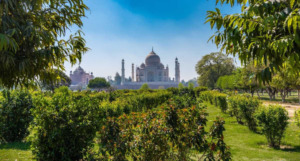
Location: Across the Yamuna River, directly opposite the Taj Mahal
Sitting across the Yamuna, this garden is best known for its Taj Mahal views, and it’s a peaceful escape from the crowds at the main complex. Originally laid out by Shah Jahan himself as a moonlit viewing garden, it’s designed on the same axis as the Taj so the monument appears perfectly framed from across the water. Sunset is the golden hour here, when the marble catches the fading light and the crowds thin out considerably. It’s also a great spot for photographers who want the Taj without hundreds of other visitors in the frame.
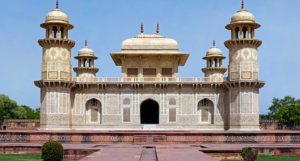
Location: Eastern bank of the Yamuna River, roughly 3.5 km from the Taj Mahal
Often called the “Baby Taj,” this tomb is famous for its delicate marble work and intricate pietra dura inlay, which many historians consider a precursor to the Taj Mahal’s own design. It was built by Empress Nur Jahan for her father, Mirza Ghiyas Beg, making it one of the first Mughal structures built entirely from white marble rather than red sandstone. The smaller scale and lighter footfall make it a quieter, slower-paced stop for anyone who loves architectural detail without the crowds.
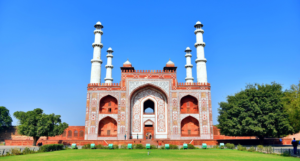
Location: Sikandra, about 8 km northwest of central Agra
Head to Sikandra for this one, another Mughal-era heavyweight, with grand red sandstone and marble architecture set against spacious, landscaped grounds. It was commissioned by Emperor Akbar himself and completed by his son Jahangir, blending Hindu, Islamic, Christian, and Jain architectural elements in a way that reflects Akbar’s famously inclusive outlook. The vast garden complex, dotted with deer and peacocks, makes for a relaxed, unhurried visit away from the more crowded central attractions.
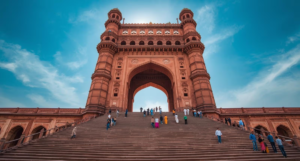
Location: About 40 km from Agra, on the way towards Jaipur
A little further out, but well worth the detour if you have the time. This entire fortified city was built by Akbar in the late 16th century to serve as his capital, only to be abandoned within decades due to water shortages, leaving behind remarkably well-preserved palaces, courtyards, and the massive Buland Darwaza gateway. Give yourself at least half a day here, since the site is sprawling and best explored slowly, ideally with a local guide who can bring the abandoned city’s history to life.
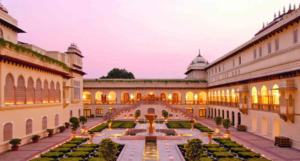
Location: On the banks of the Yamuna, near Chini ka Rauza
A classic Mughal garden that offers a greener, more laid-back sightseeing break, perfect for slotting in between heritage stops. Believed to be one of the earliest Mughal gardens in India, it’s said to have been laid out by Emperor Babur himself, making it historically significant even if it draws fewer crowds today. The terraced layout, shaded pavilions, and water channels give a glimpse of the garden design that would later influence grander Mughal landscapes, including the Taj Mahal’s own grounds.
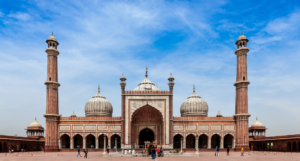
Location: Near Agra Fort, in the old city area
Close to Agra Fort, this historic mosque is easy to pair with other central Agra attractions. Built in the mid-17th century by Shah Jahan and dedicated to his daughter Jahanara Begum, it’s one of the largest mosques in India, known for its striking red sandstone facade and marble-domed roofline. The surrounding old city streets, busy with shops and everyday Agra life, make the walk here as interesting as the mosque itself.
Location: Central Agra, close to the Cantonment area
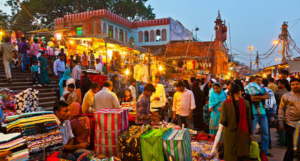
Ready for a break from monuments? Sadar Bazaar is where you go to browse local products, souvenirs, handicrafts, and street food. It’s one of Agra’s more organised markets, with a mix of shops selling leather goods, marble handicrafts, and clothing alongside stalls dishing out local snacks. Evenings here tend to be lively, making it a good stop after a long day of sightseeing when you just want to wander without an agenda.
Location: Near the Taj Mahal’s East Gate
Right near the Taj, this stretch of shops is your go-to for last-minute souvenirs and locally made products. Expect marble inlay work, handicrafts, textiles, and trinkets, much of it inspired by the very monument you’ve just visited. Bargaining is the norm here, so it’s worth comparing a few shops before settling on a price. Its location makes it an easy, no-detour stop right after you exit the Taj Mahal complex.
Location: Scattered across Agra city and its outskirts
Beyond the big names, Agra is dotted with smaller heritage gems, from lesser-known tombs and mosques to old havelis and step wells tucked away in the city’s older neighbourhoods. Many of these sites see far fewer visitors, which means you can explore them at your own pace without the crowds of the main attractions. Giving yourself extra time and perhaps a knowledgeable local guide allows you to discover a lot more than just the city’s most famous monument, and often uncovers stories that don’t make it into the standard tourist trail.
A bit of prep now saves you a headache later.
Figuring out how to get to the Taj Mahal makes the rest of your Agra trip fall into place. The city is well connected by air, rail, and road, so getting there from Delhi or beyond is fairly painless.
Agra Airport (AGR), also known as Pandit Deen Dayal Upadhyay Airport, is the nearest option, though flight connectivity can be limited. Many travellers instead fly into Indira Gandhi International Airport (DEL), Delhi, and continue to Agra by road or train.
Best route: From Delhi Airport, head towards Agra via the Yamuna Expressway for a direct road connection.
Agra Cantt Railway Station (AGC) is the main hub for travellers heading to the Taj Mahal, with solid rail connections to Delhi, Mumbai, Jaipur, and several other major cities.
Best route: From Agra Cantt Railway Station, a short taxi or auto-rickshaw ride gets you to the Taj Mahal.
Agra is linked to major cities via well-maintained highways and expressways. Coming from Delhi, the Yamuna Expressway is your smoothest option, connecting Greater Noida straight to Agra.
If you’re coming from Jaipur, take NH 21; from Delhi or nearby NCR cities, the Yamuna Expressway is the way to go.
Best route: Delhi to Yamuna Expressway to Agra to Taj Mahal.
Once you’re in Agra, getting around is pretty simple, especially if the main tourist spots are your priority.
If your day involves several monuments, group the nearby ones; it’ll save you a surprising amount of travel time.
If the Taj Mahal (plus maybe one or two nearby stops) is your main goal, a one-day Agra trip can absolutely work. But if you’d rather take things slow, give yourself two days. That way, you get the Taj Mahal, Agra Fort, Mehtab Bagh, another heritage site, plus time for food and shopping, all without feeling rushed.
Day 1
Day 2
Suggested Read: 3-Day Delhi Trip Itinerary: A Curated Guide To The Capital
Comfort wins here, especially since you’ll be doing a fair bit of walking outdoors.
Summer calls for lightweight, breathable fabrics. Winter mornings can be surprisingly cold, so bring a jacket or warm layer. And whatever the season, comfortable walking shoes are non-negotiable.
Keep it simple and practical; you’ll thank yourself later when you’re several hours and multiple monuments into the day.
No Agra trip is complete without eating your way through the city. Make time to try these local favourites:
From hotels to guesthouses to homestays and private villas, Agra has accommodation for every kind of traveller and budget. Your pick really comes down to whether you want to be near the Taj, close to the city centre, or tucked away somewhere quieter.
If you’re travelling with family or a group and want a bit more room to breathe, ELIVAAS Luxury Villas are worth a look. A private villa gives you a far more relaxed, spacious setup than your standard hotel room.
The best Taj Mahal trips aren’t the ones where you try to cram everything into a single frantic day. Start early, give the monument itself the time it deserves, and then let Agra’s forts, gardens, markets, and food scene unfold at a pace that actually feels like a holiday.
Whether you’re travelling as a couple, with family, or with friends, sorting out your timings, transport, and stay ahead of time makes all the difference. Get the details right, and your Taj Mahal visit stops being just another stop on the map; it becomes the trip you keep talking about long after you’re home.
Suggested Read: Delhi Travel Guide: Best Places To Visit, Things To Do & Travel Tips
1. What are the Taj Mahal timings?
The Taj Mahal generally opens around 30 minutes before sunrise and closes around 30 minutes before sunset. It is closed to regular visitors on Fridays.
2. What is the best time to visit the Taj Mahal?
October to February is generally the most comfortable window for sightseeing. Early mornings are also a smart pick during the hotter months.
3. Is the Taj Mahal closed on Friday?
Yes, it’s generally closed to regular visitors on Fridays.
4. How long should I spend at the Taj Mahal?
Around 2 to 3 hours is usually enough to explore the main complex without feeling rushed.
5. What places can I visit near the Taj Mahal?
Agra Fort, Mehtab Bagh, Itimad-ud-Daulah’s Tomb, Akbar’s Tomb, and local markets are all worth adding to your itinerary.
6. Can I visit the Taj Mahal in one day?
Yes, a one-day trip works well as long as you plan efficiently and start early.
7. How can I reach the Taj Mahal from Delhi?
You can get from Delhi to Agra by train, road, or other available transport. The Yamuna Expressway is the most common road route.
8. What should I carry to the Taj Mahal?
Your ticket, essential ID if required, comfortable footwear, water, and sun protection. Skip anything unnecessary; security restrictions are strict.
9. What food is Agra famous for?
Agra is best known for its petha. Beyond that, try bedai with jalebi, Mughlai food, parathas, and other North Indian dishes.
10. Where should I stay in Agra?
You’ve got hotels, guesthouses, homestays, and private villas to choose from. ELIVAAS Luxury Villas are a great fit for families and groups wanting extra space and privacy.
Planning a New Year party in Goa in 2027? Goa is a popular destination for welcoming the New Year,... Read more

Dubai is often associated with towering skyscrapers, luxury shopping malls and glamorous... Read more

Jaipur is known for its royal heritage, colourful markets and vibrant cultural traditions. Every... Read more
Arjan is a growing residential neighbourhood in Dubai that offers a refreshing mix of green spaces,... Read more
Planning a New Year party in Goa in 2027? Goa is a popular destination for welcoming the New Year,... Read more
Dubai is often associated with towering skyscrapers, luxury shopping malls and glamorous... Read more
Jaipur is known for its royal heritage, colourful markets and vibrant cultural traditions. Every... Read more
Arjan is a growing residential neighbourhood in Dubai that offers a refreshing mix of green spaces,... Read more
 Switch
 Explore
 My Bookings
 Profile
